
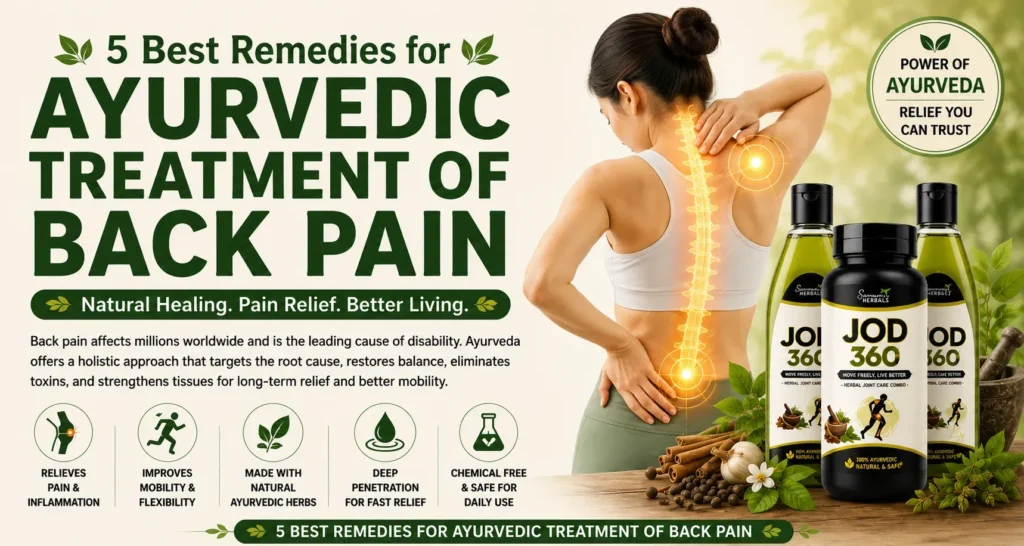
Back pain is one of the most common and most disruptive health issues people deal with today. According to the World Health Organization, low back pain affected 619 million people worldwide in 2020, making it the leading cause of disability globally. That number is projected to climb to 843 million by 2050. For many sufferers, conventional pain medications only mask symptoms without addressing the root cause.
Ayurveda, India’s ancient system of natural medicine, takes a fundamentally different approach. Rather than suppressing pain signals, Ayurvedic treatment of back pain works to restore balance in the body, eliminate toxins, strengthen tissues, and correct the underlying imbalance driving the condition. With growing scientific interest in traditional healing systems, more people are turning to Ayurvedic remedies for lower back pain as a safe, holistic alternativeor complement to conventional care.
This guide covers everything you need to know: from how Ayurveda understands back pain, to the five best treatment remedies, the most effective herbs and oils, dietary guidance, and when to seek professional help.
What is Ayurvedic Treatment of Back Pain?
Ayurvedic treatment of back pain (called Katishoola in Sanskrit) focuses on rebalancing the Vata dosha—the energy governing movement and the nervous system. Treatment combines herbal medicines, medicated oil therapies, Panchakarma detoxification, therapeutic yoga, and a Vata-pacifying diet. These approaches work together to reduce inflammation, eliminate toxins, strengthen spinal tissues, and provide both short-term and long-term pain relief.
Table of Contents
- Understanding Back Pain According to Ayurveda
- Common Causes of Back Pain
- Symptoms of Back Pain
- How Ayurveda Treats Back Pain
- 5 Best Remedies for Ayurvedic Treatment of Back Pain
- Best Ayurvedic Herbs Explained
- Best Ayurvedic Oils for Back Pain
- Foods to Eat
- Foods to Avoid
- Daily Routine for Faster Recovery
- Lifestyle Tips
- When to Visit an Ayurvedic Doctor
- Frequently Asked Questions
Understanding Back Pain According to Ayurveda
In Ayurveda, back pain is primarily classified as Katishoola—a disorder rooted in the aggravation of the Vata dosha. Vata governs all movement, circulation, and nerve function in the body. When it becomes aggravated—through poor lifestyle habits, stress, cold weather, or inadequate nutrition—it disrupts the normal functioning of joints, muscles, and bones, leading to stiffness, pain, and reduced mobility.
Two key pathological processes drive Ayurvedic back pain:
- Dhatukshaya (Tissue Degeneration): Vata’s dry, cold qualities erode the body’s tissues particularly bone (Asthi Dhatu) and muscle (Mamsa Dhatu). This is especially relevant in chronic low back pain and lumbar spondylosis.
- Ama Accumulation (Toxin Buildup): Impaired digestion generates Ama (metabolic waste), which accumulates in joints and muscles, obstructing the natural flow of Vata and causing inflammation, stiffness, and pain.
Understanding this framework is key, because Ayurvedic treatment targets both the aggravated Vata and the accumulated Ama simultaneously not just the pain itself.
Common Causes of Back Pain
Ayurveda identifies both physical and behavioral factors that aggravate Vata and contribute to back pain:
Cause | Ayurvedic Explanation |
|---|---|
Sedentary lifestyle / prolonged sitting | Stagnates Vata; weakens lumbar muscles |
Poor posture | Compresses spinal tissues; disrupts Vata flow |
Cold, dry, or processed food | Directly aggravates Vata dosha |
Chronic stress and anxiety | Vata is the most stress-sensitive dosha |
Overexertion or injury | Damages Mamsa (muscle) and Asthi (bone) Dhatu |
Inadequate sleep | Depletes Ojas (vital energy); weakens body tissues |
Aging and degeneration | Natural increase of Vata with age |
Symptoms of Back Pain
Symptoms Checklist:
- Dull ache or sharp pain in the lower back
- Stiffness, especially after waking up
- Reduced range of motion when bending or twisting
- Pain radiating down the legs (sciatica)
- Muscle cramps or spasms
- Numbness or tingling sensation in the lower limbs
- Pain worsening in cold weather or after long sitting
- Difficulty standing upright for extended periods
If you’re experiencing numbness, weakness, or loss of bladder or bowel control, seek immediate medical attention. These may indicate a more serious spinal condition.
How Ayurveda Treats Back Pain
The Ayurvedic approach to treating back pain is multi-layered. Rather than prescribing a single remedy, a qualified Ayurvedic practitioner designs a treatment plan based on the individual’s Prakriti (body constitution), the severity of the condition, and the specific dosha imbalance involved.
The treatment strategy typically combines:
- Internal herbal medicine to reduce inflammation and nourish tissues
- External therapies like medicated oil massage and Kati Basti
- Panchakarma detoxification to eliminate deep-seated Ama
- Yoga and movement to restore flexibility and strengthen the spine
- Dietary and lifestyle modifications to prevent recurrence
This integrated model aligns with what global health authorities increasingly advocate a biopsychosocial approach to chronic pain that goes beyond medication.
5 Best Remedies for Ayurvedic Treatment of Back Pain
1. Ayurvedic Herbs
Herbal medicine is the backbone of Ayurvedic treatment for back pain. Several herbs have demonstrated meaningful anti-inflammatory and analgesic properties in clinical and laboratory settings.
Key herbs include:
- Guggulu (Commiphora mukul) – A potent anti-inflammatory used in formulations like Yograj Guggulu and Mahayograj Guggulu for lumbar spondylosis and joint pain
- Shallaki (Boswellia serrata) – Reduces pain and stiffness; commonly prescribed for osteoarthritis and disc-related conditions
- Ashwagandha (Withania somnifera) – An adaptogenic herb that improves muscle strength, reduces Vata, and lowers stress-related pain
- Nirgundi (Vitex negundo) – Applied topically as oil or paste; effective for acute inflammatory back pain
- Dashamoola – A classical ten-root formulation that manages Vata disorders, reduces inflammation, and strengthens the musculoskeletal system
For a detailed breakdown of each herb, see the Best Ayurvedic Herbs Explained section below.
2. Medicated Oils
Therapeutic oil application is central to Ayurvedic treatment of back pain. Warm medicated oils penetrate muscle and connective tissue layers, nourishing depleted Dhatus, reducing stiffness, and calming aggravated Vata.
Commonly used oils include:
- Mahanarayan Taila – Rich in anti-inflammatory herbs; ideal for chronic muscle and joint pain
- Sahacharadi Taila – Used specifically for neurological and musculoskeletal conditions; shown in a randomized controlled trial (SAGE Journals, 2015) to be effective in chronic low back pain
- Dhanvantaram Taila – Classical formula for Vata disorders; widely used in post-treatment recovery and degenerative conditions
These oils are applied either through Abhyanga (full-body massage) or Kati Basti (localized oil retention therapy).
3. Panchakarma Therapy
Panchakarma—Ayurveda’s system of five purification therapies—is the most comprehensive treatment protocol for chronic back pain in Ayurveda. A case report published on PubMed Central (PMC12437230, NIH) documented a Kati Basti protocol of 45 minutes, once weekly for 8 weeks, for chronic low back pain management.
Key Panchakarma treatments for back pain include:
Kati Basti: A specialized procedure where a dough ring is created on the lower back, and warm medicated oil is poured into it and held for a set duration. This directly targets the lumbar region, lubricates the discs, and calms Vata. Particularly effective for lumbar spondylosis and disc-related problems.
Abhyanga: A full-body warm oil massage using herbal oils. It improves circulation, relieves muscle stiffness, and pacifies Vata throughout the body.
Basti (Medicated Enema): Considered the most effective Panchakarma therapy for Vata disorders. Medicated herbal oils or decoctions are administered rectally to balance Vata, improve joint lubrication, and nourish spinal tissues. Ksheera Basti (using medicated milk) is commonly used in chronic cases.
Pinda Sweda: A herbal bolus therapy where medicated herbs or rice are wrapped in cloth and applied with heat to the affected area. Particularly effective for muscular stiffness and localized lower back pain.
Virechana: Therapeutic purgation using herbal laxatives to clear Pitta and Ama beneficial in inflammatory back conditions like ankylosing spondylitis.
4. Yoga and Stretching
Yoga is a core component of Ayurvedic therapy for back pain. Specific postures strengthen lumbar muscles, decompress the spine, and improve flexibility. A randomized controlled trial published in ScienceDirect (2024) found that combining yoga with Kati Basti therapy significantly reduced chronic low back pain and improved functional ability.
Recommended yoga poses for lower back pain:
- Bhujangasana (Cobra Pose) – Strengthens the lower back, opens the chest, and stretches spinal extensors
- Balasana (Child’s Pose) – Gently decompresses the lumbar spine and releases tension
- Dhanurasana (Bow Pose) – Strengthens the entire back and improves spinal flexibility
- Marjaryasana-Bitilasana (Cat-Cow Stretch) – Mobilizes the spine and warms up lumbar muscles
- Setu Bandhasana (Bridge Pose) – Strengthens glutes and lower back while relieving sciatica
Start with gentle poses and consult a qualified yoga therapist or Ayurvedic doctor before practicing if you have acute pain, disc herniation, or sciatica.
5. Diet and Lifestyle Changes
A Vata-pacifying diet is as important as any therapy in Ayurvedic back pain treatment. Food choices directly influence dosha balance and the formation (or prevention) of Ama.
For detailed food guidance, see the Foods to Eat and Foods to Avoid sections below.
Best Ayurvedic Herbs Explained
Herb | Key Benefits | Best For |
|---|---|---|
Ashwagandha (Withania somnifera) | Reduces stress, improves muscle strength, calms Vata | Chronic pain, stress-related back pain, muscle weakness |
Shallaki (Boswellia serrata) | Anti-inflammatory, reduces joint stiffness, improves mobility | Lumbar spondylosis, osteoarthritis, disc pain |
Guggulu (Commiphora mukul) | Potent anti-inflammatory and analgesic | Ankylosing spondylitis, chronic joint inflammation |
Nirgundi (Vitex negundo) | Pain-relieving, anti-inflammatory (topical) | Acute back pain, localized muscle inflammation |
Dashamoola (Ten-root formula) | Reduces inflammation, strengthens musculoskeletal system | Vata disorders, chronic lower back pain |
Turmeric (Curcuma longa) | Contains curcumin; powerful anti-inflammatory antioxidant | Inflammatory back pain, general joint health |
Ginger (Zingiber officinale) | Improves digestion, reduces Ama, anti-inflammatory | Stiffness, Ama-related back pain, circulation |
Expert Tip: Herbs like Shallaki and Guggulu work best when taken as part of a classical Ayurvedic formulation (e.g., Yograj Guggulu) under the guidance of a qualified practitioner. Self-medicating with isolated herbal extracts may not deliver the same results.
Best Ayurvedic Oils for Back Pain
Oil | Uses | How to Apply |
|---|---|---|
Jod360 oil | Chronic muscle pain, joint stiffness, Vata imbalance | Warm and apply with firm massage on the lower back; use in Abhyanga or Kati Basti |
Sahacharadi Taila | Neurological conditions, sciatica, musculoskeletal disorders | Gentle massage along the spine; also used in Basti therapy |
Dhanvantaram Taila | Degenerative conditions, post-treatment recovery, disc pain | Apply warm before bathing; can be used for daily Abhyanga |
Sesame Oil (plain) | General Vata pacification, daily self-massage (Dinacharya) | Warm slightly; massage lower back and feet before bathing |
Nirgundi Oil | Acute inflammatory pain, localized swelling | Apply directly to the painful area; leave for 20–30 minutes |
Foods to Eat
A Vata-pacifying diet focuses on warm, moist, nourishing, and easily digestible foods that counteract Vata’s cold, dry qualities.
Foods to Eat | Why |
|---|---|
Warm soups and stews | Easy to digest; nourishing to tissues |
Ghee (clarified butter) | Lubricates joints; nourishes bone tissue |
Cooked vegetables (carrots, sweet potato, beets) | Warm, grounding; easy on digestion |
Whole grains (rice, oats, quinoa) | Sustained energy; supports tissue repair |
Sesame seeds | Rich in calcium; supports Asthi (bone) Dhatu |
Warm herbal teas (ginger, cumin, cinnamon) | Reduces Ama; improves digestion and circulation |
Milk with turmeric (“golden milk”) | Anti-inflammatory; nourishes tissues |
Nuts and seeds (soaked almonds, walnuts) | Healthy fats; support nerve and muscle function |
Foods to Avoid
Foods to Avoid | Why |
|---|---|
Cold, raw, or refrigerated foods | Aggravates Vata; slows digestion |
Processed and packaged foods | Generates Ama; depletes tissue quality |
Carbonated drinks | Increases Vata in the colon and gut |
Excess caffeine | Dehydrates tissues; aggravates Vata |
Refined sugars | Promotes inflammation; disrupts digestion |
Legumes in excess (without proper preparation) | Gas-forming; aggravates Vata |
Nightshade vegetables (tomatoes, peppers in excess) | Can aggravate Pitta and worsen inflammation |
Daily Routine for Faster Recovery
A structured daily routine (Dinacharya) is one of the most underused tools in Ayurvedic back pain management. Consistency in daily habits stabilizes Vata and prevents recurrence.
Morning:
- Wake up before 7:00 AM to avoid Kapha accumulation
- Drink warm water with ginger or lemon to kickstart digestion
- Practice 10–15 minutes of gentle yoga or spinal stretching
- Apply warm sesame or Dhanvantaram oil to the lower back before bathing
Afternoon:
- Eat the main meal at midday when digestion is strongest
- Take a short 10-minute walk after lunch
- Avoid prolonged sitting; take standing breaks every 45–60 minutes
Evening:
- Avoid cold, heavy meals after sunset
- Gentle pranayama (breathing exercises) or meditation for 10 minutes
- Apply warm herbal oil to the lower back before bed
- Sleep by 10:00 PM on a supportive mattress
Lifestyle Tips
Prevention Checklist:
- Maintain correct posture while sitting, standing, and lifting
- Use a lumbar-supportive chair or cushion if working at a desk
- Exercise consistently—walking, swimming, and yoga are ideal
- Stay warm; avoid exposure to cold, damp environments
- Practice stress management daily through meditation or breathwork
- Stay well-hydrated with warm or room-temperature water
- Avoid carrying heavy bags on one shoulder
- Sleep on a firm mattress with a supportive pillow
Expert Tip: Stress and Vata are deeply linked. Even the most effective herbal protocol will underdeliver if chronic stress is left unmanaged. Pranayama practices like Nadi Shodhana (alternate nostril breathing) are particularly effective at calming Vata and reducing stress-related back tension.
Remedies Comparison Table
Remedy | Best For | Estimated Time to Show Results |
|---|---|---|
Ayurvedic herbs (oral) | Chronic inflammation, tissue repair | 4–8 weeks with consistent use |
Medicated oil massage | Stiffness, muscle tension, acute pain | 1–2 weeks with regular application |
Kati Basti | Lumbar spondylosis, disc pain, chronic LBP | 4–8 sessions over 4–8 weeks |
Panchakarma (full course) | Deep-rooted chronic conditions, Ama clearance | 2–4 weeks intensive program |
Yoga and stretching | Flexibility, prevention, mild-moderate pain | 2–4 weeks of consistent practice |
Diet and lifestyle changes | Long-term prevention and Vata balance | 3–6 weeks for noticeable improvement |
Myth vs Fact
Myth | Fact |
|---|---|
Ayurveda only works for mild pain | Ayurvedic therapies like Panchakarma have shown effectiveness even in chronic and severe cases, including lumbar spondylosis |
Ayurvedic herbs are slow and ineffective | Some herbs like Shallaki begin reducing inflammation within 2–4 weeks; results depend on adherence and proper formulation |
You can’t use Ayurveda alongside modern medicine | Integrative approaches are increasingly studied; always inform both your Ayurvedic and conventional physicians |
Dietary changes are optional | In Ayurveda, diet is medicine. Ignoring dietary recommendations significantly reduces treatment effectiveness |
All Ayurvedic treatments are the same | Treatment is highly personalized based on Prakriti and dosha imbalance; what works for one person may not suit another |
Key Takeaways
- Low back pain (Katishoola) in Ayurveda is primarily a Vata dosha disorder
- Effective Ayurvedic treatment combines herbal medicine, oil therapies, Panchakarma, yoga, and diet
- Kati Basti and Abhyanga are two of the most researched external Ayurvedic therapies for lower back pain
- Herbs like Shallaki, Guggulu, and Ashwagandha offer clinically relevant anti-inflammatory and analgesic benefits
- A Vata-pacifying diet is non-negotiable for lasting relief
- Consistency matters—most Ayurvedic protocols require 4–8 weeks to show meaningful results
- Always consult a qualified Ayurvedic practitioner, especially for chronic, severe, or complex spinal conditions
When to Visit an Ayurvedic Doctor
Mild back pain often improves with home remedies, lifestyle adjustments, and self-care. But certain situations call for professional evaluation—preferably from both a qualified Ayurvedic practitioner and a conventional medical doctor.
Seek professional help if you experience:
- Back pain lasting more than 6 weeks without improvement
- Pain radiating down the leg (possible sciatica or nerve compression)
- Numbness, tingling, or weakness in the legs or feet
- Pain following an injury or fall
- Unexplained weight loss alongside back pain
- Back pain that worsens at night or doesn’t improve with rest
- Bladder or bowel changes alongside back pain
Ayurvedic practitioners will assess your Prakriti, identify the dominant dosha imbalance, and create a personalized treatment protocol. This may include internal herbal medicine, a Panchakarma program, dietary counseling, and a structured yoga routine.
Ayurveda Offers a Path—Not a Quick Fix
Back pain is rarely just a structural problem. For millions of people, it’s the result of years of accumulated stress, poor dietary habits, sedentary behavior, and lifestyle imbalances—all of which Ayurveda addresses at the root.
The five remedies covered in this guide—Ayurvedic herbs, medicated oils, Panchakarma therapy, yoga, and dietary changes—form a complete, evidence-informed framework for both managing existing pain and preventing its return. They work best when combined, personalized to your constitution, and practiced with consistency.
If you’re living with chronic or recurring back pain, consider scheduling a consultation with a qualified Ayurvedic practitioner to design a treatment plan tailored to your specific needs. The Ministry of AYUSH (ayush.gov.in) maintains a registry of certified Ayurvedic practitioners across India. Outside India, look for practitioners trained under accredited institutions and registered with recognized Ayurvedic or integrative medicine bodies.
Start small. Add a daily warm oil massage. Drink ginger tea instead of coffee. Try a 10-minute yoga practice in the morning. Small, consistent changes in the direction of Vata balance—repeated daily—create the foundation for a pain-free back.
Frequently Asked Questions
What is the best Ayurvedic treatment for back pain?
The most effective Ayurvedic treatment for back pain typically combines Kati Basti (medicated oil retention on the lower back), oral Ayurvedic herbal formulations like Yograj Guggulu or Dashamoola, and a Vata-pacifying diet. For chronic conditions, a full Panchakarma protocol supervised by a qualified practitioner delivers the most comprehensive results. Treatment should always be individualized based on your body constitution and symptom pattern.
Can Ayurveda cure chronic back pain?
Ayurveda can significantly reduce and, in many cases, resolve chronic back pain—particularly when the root cause is Vata imbalance, Ama accumulation, or tissue degeneration. However, Ayurveda does not claim a universal cure. Results depend on the severity of the condition, adherence to treatment, and lifestyle compliance. People with structural spinal damage (e.g., severe disc herniation) may benefit from an integrative approach combining Ayurveda with conventional medicine.
Which herb is best for lower back pain in Ayurveda?
Shallaki (Boswellia serrata) and Guggulu (Commiphora mukul) are among the most clinically studied Ayurvedic herbs for lower back pain. Shallaki reduces joint inflammation and improves mobility, while Guggulu is particularly effective in formulations targeting lumbar spondylosis and ankylosing spondylitis. Ashwagandha is preferred when stress and muscle weakness are contributing factors.
Which Ayurvedic oil is best for back pain?
Mahanarayan Taila is widely regarded as the most effective Ayurvedic oil for back pain due to its broad anti-inflammatory and Vata-pacifying properties. Sahacharadi Taila is preferred for neurological and sciatica-related pain. A 2015 randomized controlled trial (SAGE Journals) found Sahacharadi Taila massage to be effective in managing chronic low back pain.
What foods should be avoided for back pain in Ayurveda?
Foods that aggravate Vata should be avoided: cold and raw foods, carbonated beverages, processed snacks, excess caffeine, refined sugar, and legumes consumed without proper preparation. These foods worsen Vata imbalance, slow digestion, and promote Ama formation—all of which intensify back pain symptoms.
Which Panchakarma therapy works best for back pain?
Kati Basti is generally considered the most targeted Panchakarma therapy for lower back pain. A case documented in PubMed Central (PMC12437230) reported a protocol of Kati Basti for 45 minutes, once weekly over 8 weeks. For systemic Vata imbalance, Basti (medicated enema therapy) is considered the most powerful Panchakarma treatment for Vata disorders overall.
How long does Ayurvedic treatment for back pain take to work?
Most people notice improvement in muscle stiffness and acute pain within 1–2 weeks of daily oil massage and herbal therapy. Chronic back pain typically requires 4–8 weeks of consistent treatment before significant changes occur. A complete Panchakarma program runs 2–4 weeks and addresses deeper tissue-level imbalances.
Is Ayurvedic treatment for back pain safe?
When administered by a qualified Ayurvedic practitioner, Ayurvedic therapies for back pain are generally safe. However, certain herbal formulations may interact with existing medications, and some Panchakarma procedures are contraindicated in pregnancy, severe systemic illness, or advanced degeneration. Always disclose all current medications and health conditions to your practitioner before starting treatment.
How to cure back pain naturally with Ayurveda at home?
For at-home Ayurvedic treatment of back pain, focus on: daily warm sesame or Mahanarayan oil self-massage, a Vata-pacifying diet (warm cooked foods, ghee, ginger tea), gentle yoga poses like Bhujangasana and Balasana, and stress reduction through pranayama. Herbal teas with ginger and turmeric also help reduce inflammation. For persistent or severe pain, consult a qualified Ayurvedic physician before relying solely on home remedies.
Is Ayurvedic treatment effective for sciatica pain?
Yes. Sciatica is closely related to Vata aggravation along nerve pathways in Ayurveda. Therapies such as Sahacharadi Taila massage, Basti (medicated enema), and specific yoga postures like Setu Bandhasana and Balasana are commonly used to manage sciatica. A systematic review protocol published in ScienceDirect (2024) supports further investigation of Ayurveda interventions for non-specific chronic low back pain, which often overlaps with sciatic presentations.