
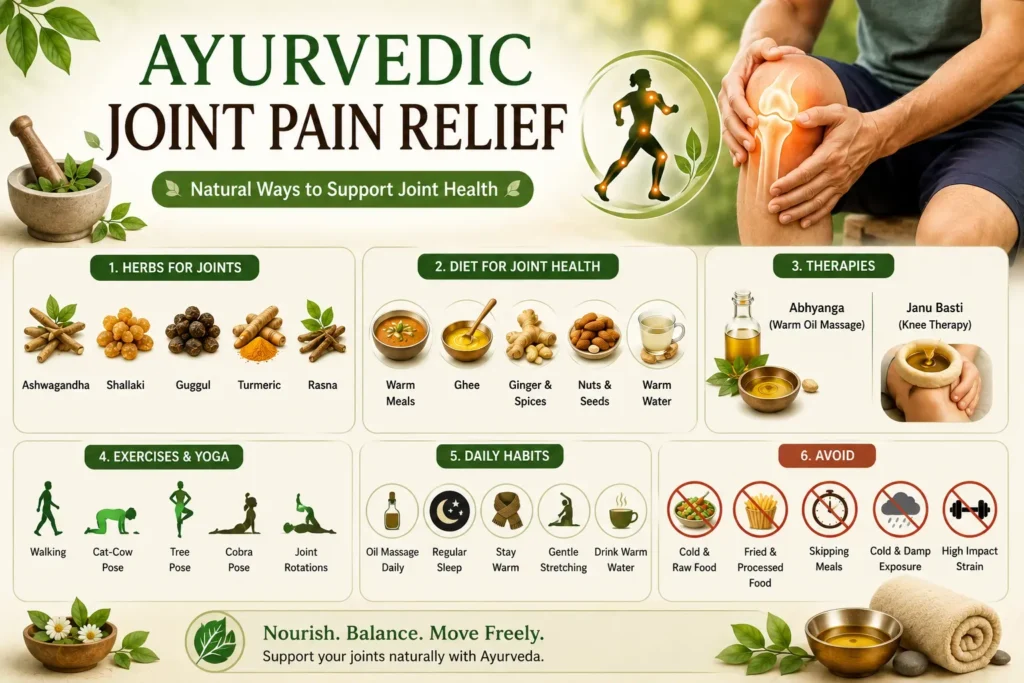
Ayurvedic Joint Pain Relief: Natural Ways to Support Joint Health
Joint discomfort whether from age, overuse, weather changes, or an active lifestyle is one of the most common wellness concerns people search for solutions to. Alongside conventional treatment, many people turn to Ayurveda, India’s ancient healing system, for gentle, sustainable ways to ease stiffness and support long-term mobility. In this guide, we’ll explore ayurvedic joint pain relief methods, including herbs, diet, and daily habits that support joint health naturally.
Note: Ayurvedic practices work best as supportive, complementary measures alongside proper medical care. If joint pain is severe, sudden, accompanied by swelling/redness, or persists despite home care, consult a doctor to rule out underlying conditions like arthritis, injury, or autoimmune disorders.
Table of Contents
- How Ayurveda Views Joint Pain
- Ayurvedic Herbs for Joints
- Ayurvedic Diet for Joint Health
- Abhyanga and Traditional Therapies for Joints
- Gentle Exercises and Yoga for Joint Care
- Daily Habits for Natural Joint Care
- Foods and Habits to Avoid for Joint Health
- Frequently Asked Questions
- Conclusion
1. How Ayurveda Views Joint Pain
In Ayurveda, joint pain is primarily associated with an imbalance of Vata dosha, which governs movement, and the accumulation of Ama (undigested toxins believed to result from weak digestion). When Vata becomes aggravated due to cold weather, irregular routines, stress, or poor diet it’s believed to settle in the joints, leading to dryness, stiffness, and discomfort. This is often referred to in classical texts as Sandhivata, a condition with similarities to what is known today as osteoarthritis.
Ayurvedic joint pain relief approaches, therefore, focus on pacifying Vata, improving digestion to reduce Ama buildup, and nourishing joint tissue (Asthi and Majja Dhatu) through diet, herbs, and lifestyle practices.
2. Ayurvedic Herbs for Joints
Several Ayurvedic herbs for joints have traditionally been used to support comfort, flexibility, and mobility:
- Ashwagandha – An adaptogen traditionally used to support strength and reduce stress related tension in the body.
- Shallaki (Boswellia serrata) – One of the most studied Ayurvedic herbs, traditionally used to support joint comfort and flexibility.
- Guggul – Used in classical formulations aimed at supporting healthy joint function.
- Turmeric (Haridra) – Valued for its traditional use in supporting the body’s natural inflammatory response.
- Rasna – Commonly included in Ayurvedic joint formulations for its traditional association with Vata balance.
These herbs are most commonly used in professionally prepared blends (like churnas, tablets, or medicated oils) rather than alone, and should be used under the guidance of a certified Ayurvedic practitioner particularly for those on other medications, as some herbs can interact with prescription drugs.
3. Ayurvedic Diet for Joint Health
Diet plays a key role in natural joint care, since Ayurveda links joint health closely to digestion. Commonly recommended practices include:
- Warm, cooked, easily digestible meals – To pacify Vata and support digestion, reducing Ama buildup.
- Healthy fats like ghee and sesame oil – Traditionally considered lubricating and nourishing for joints.
- Ginger and warming spices – Used in cooking to support digestion and circulation.
- Soaked nuts and seeds – For sustained nourishment without overburdening digestion.
- Reducing raw, cold, and leftover foods – Believed to aggravate Vata and slow digestion.
Staying warm, eating at regular times, and avoiding excessive fasting are also emphasized, since irregular eating patterns are thought to aggravate Vata further.
4. Abhyanga and Traditional Therapies for Joints
Abhyanga (warm oil massage) is one of the most widely recommended Ayurvedic therapies for joint comfort. Medicated oils such as Mahanarayan oil or Sesame oil infused with Vata pacifying herbs are traditionally massaged into affected joints to:
- Improve local circulation
- Ease stiffness, especially in the morning or cold weather
- Support flexibility and reduce dryness in joint tissue
More specialized treatments like Janu Basti (a therapy where warm medicated oil is pooled over the knee joint using a dough dam) are also used for targeted joint support, but these should only be performed by trained Ayurvedic practitioners in a clinical setting.
5. Gentle Exercises and Yoga for Joint Care
Movement is essential for joint health, but Ayurveda emphasizes gentle, consistent activity over high-impact strain, especially for Vata related joint concerns:
- Walking – A simple, low-impact way to keep joints mobile.
- Bhujangasana (Cobra Pose) – Gently strengthens the back and supports spinal joint flexibility.
- Vrikshasana (Tree Pose) – Builds balance and strengthens supporting muscles around joints.
- Marjariasana (Cat-Cow Pose) – Improves spinal and joint mobility through gentle movement.
- Joint rotations (Pawanmuktasana series) – A traditional sequence of gentle rotational movements for wrists, ankles, knees, and shoulders, often used as a warm-up.
Exercise should be gentle and consistent rather than intense, especially during flare-ups of joint discomfort.
6. Daily Habits for Natural Joint Care
Ayurveda’s daily routine (Dinacharya) includes several habits believed to support long term joint health:
- Warm oil self-massage before bathing, especially in cold or dry weather.
- Maintaining regular sleep and meal timings to keep Vata balanced.
- Staying warm, particularly the joints, during cold weather or air conditioned environments.
- Gentle morning stretching to ease overnight stiffness before starting the day.
- Adequate hydration with warm water to support digestion and reduce Ama accumulation.
7. Foods and Habits to Avoid for Joint Health
To support joint pain relief naturally, Ayurveda also recommends limiting:
- Excess cold, raw, or frozen foods, which are believed to aggravate Vata
- Fried, processed, and heavily preserved foods
- Skipping meals or irregular eating schedules
- Prolonged exposure to cold, damp environments without adequate protection
- Excessive, high-impact physical strain without adequate warm up
8. Frequently Asked Questions
Q1: Can Ayurveda cure arthritis?
Ayurvedic practices can support joint comfort, flexibility, and overall mobility, but they aren’t a cure for diagnosed conditions like rheumatoid arthritis or advanced osteoarthritis. These should be managed with a doctor’s guidance, with Ayurveda used as a complementary approach.
Q2: How long does it take to feel relief from Ayurvedic joint remedies?
Since Ayurvedic methods work by gradually improving digestion, circulation, and tissue nourishment, consistent use over several weeks to months is typically needed to notice meaningful changes, rather than immediate relief.
Q3: Is oil massage safe for swollen joints?
Warm oil massage is generally recommended for stiffness rather than active swelling or inflammation. If a joint is swollen, red, or acutely painful, consult a doctor before applying any massage or heat therapy.
Q4: Can diet really affect joint pain?
Yes Ayurveda’s emphasis on reducing Ama (toxin buildup) through better digestion aligns with the modern understanding that certain foods can influence inflammation levels in the body, indirectly affecting joint comfort.
9. Conclusion
Ayurvedic joint pain relief offers a gentle, root-cause-focused approach that goes beyond just easing discomfort it aims to support digestion, circulation, and long-term tissue nourishment for lasting joint health. Combining warm, nourishing foods, traditional herbs, gentle movement, and consistent daily habits can make a meaningful difference in natural joint care over time.
If you’re considering Ayurvedic herbs for joints or therapies like Abhyanga and Janu Basti, consult a certified Ayurvedic practitioner to ensure the approach is safe and suited to your specific condition.