
Joint discomfort, muscle stiffness, and back pain can make everyday activities more challenging. Whether you spend long hours sitting at a desk, perform physically demanding work, or experience stiffness after exercise, taking care of your joints and muscles is an important part of maintaining an active lifestyle.
Ayurveda, India’s traditional system of wellness, includes herbal oils and massage practices that have been used for generations to support relaxation and physical comfort. Choosing an appropriate Ayurvedic pain relief oil can be one part of a broader routine that includes regular movement, balanced nutrition, and adequate rest.
In this guide, we will explore traditional Ayurvedic oils, commonly used herbs, massage practices, and everyday habits that support joint and muscle care.
What Is Ayurvedic Pain Relief Oil?
Ayurvedic pain relief oil is a topical formulation inspired by traditional Ayurvedic practices. Such oils may contain plant-based ingredients traditionally used in massage routines for soothing comfort and relaxation.
Depending on the formulation, these products may be used to massage areas such as the knees, shoulders, back, neck, and muscles after physical activity.
However, results vary depending on the ingredients, the cause of discomfort, and individual needs. Massage oils should not replace medical evaluation or prescribed treatment for persistent or severe pain.
Common Causes of Joint and Muscle Discomfort
Several everyday factors can contribute to muscle stiffness and joint discomfort.
1. Prolonged Sitting
Sitting for extended periods may contribute to stiffness in the back, neck, and shoulders. Taking regular movement breaks and maintaining a comfortable workstation can help.
2. Physical Activity and Muscle Fatigue
Exercise, lifting heavy objects, or repetitive movements may leave muscles feeling tired or sore. Appropriate rest and gradual increases in activity can support recovery.
3. Age-Related Changes
As people age, changes in muscles, joints, and connective tissues may affect mobility and comfort. Gentle physical activity and appropriate joint care can help maintain everyday function.
4. Poor Posture and Repetitive Movements
Repeated movements and uncomfortable working positions can place extra strain on certain muscle groups. Improving posture and varying your activities may help reduce unnecessary strain.
5. Underlying Joint Conditions
Persistent joint pain can sometimes be associated with arthritis, injuries, inflammation, or other medical conditions. Identifying the underlying cause is important for choosing the right treatment.
Ayurvedic Herbs Traditionally Used in Joint-Care Oils
Many Ayurvedic formulations combine several herbs. The properties and intended uses depend on the specific ingredients and preparation.
Ashwagandha
Ashwagandha is a well-known herb in traditional Ayurveda. It is commonly included in wellness formulations, although evidence for its effectiveness varies by use and preparation.
Shallaki
Shallaki, also known as Boswellia, has been studied for its potential role in joint comfort, particularly in certain oral preparations. Evidence from those preparations cannot automatically be applied to every topical oil.
Nirgundi
Nirgundi is traditionally used in Ayurvedic practices involving musculoskeletal comfort. More research is needed to establish the effectiveness of specific topical preparations.
Dashmool
Dashmool refers to a traditional Ayurvedic combination of ten roots. It appears in various formulations used in traditional wellness practices.
Aak and Nagarmotha
Aak and Nagarmotha are also found in some traditional herbal formulations. Their safety and suitability depend on the preparation, concentration, and intended use. Aak in particular can be irritating or toxic if improperly prepared, so homemade applications should be avoided.
Important: Traditional use does not guarantee clinical effectiveness or safety. Always check the product’s ingredients and directions before use.
Potential Benefits of Massage as Part of a Joint-Care Routine
Gentle massage may provide temporary comfort and relaxation for some people.
- Relaxation: A gentle massage can feel soothing after a tiring day.
- Muscle comfort: Massage may temporarily ease the sensation of muscle tension.
- Daily self-care: A consistent routine can encourage people to pay attention to their physical comfort.
- Mobility support: Combining appropriate massage with movement and prescribed exercises may help support an overall joint-care routine.
An oil should not be assumed to cure arthritis, repair damaged joints, or permanently eliminate pain. The benefits depend on the individual and the underlying cause of the symptoms.
How to Use Ayurvedic Pain Relief Oil
Follow the instructions provided with your specific product. For a topical oil intended for massage, these general precautions may help:
- Read the label and check the ingredients before application.
- Apply only the recommended quantity to intact skin.
- Massage gently without applying excessive pressure to painful areas.
- Stop using the product if you experience burning, irritation, swelling, or a rash.
- Avoid contact with the eyes, mouth, and other sensitive areas.
- Do not apply the oil to broken skin or use it with heat unless the product instructions specifically allow it.
If you are pregnant, have a known allergy, or are using other topical medicines, consult a healthcare professional about whether the product is suitable for you.
Everyday Habits That Support Joint Health
An effective joint-care routine involves more than massage oil.
Stay Physically Active
Walking, swimming, and suitable strengthening exercises can support mobility. Choose activities according to your ability and medical advice.
Maintain a Comfortable Posture
Adjust your workstation, take regular breaks, and change positions throughout the day.
Eat a Balanced Diet
Include a variety of vegetables, fruits, protein sources, whole grains, and other nutrient-rich foods to support general health.
Prioritise Sleep and Recovery
Adequate rest can support recovery after physical activity. Avoid repeatedly overloading an area that is already painful.
Seek Medical Advice When Needed
Consult a healthcare professional if pain persists, worsens, limits daily activities, or repeatedly returns. Sudden severe pain, a hot or swollen joint with fever, or an inability to bear weight requires prompt medical attention.
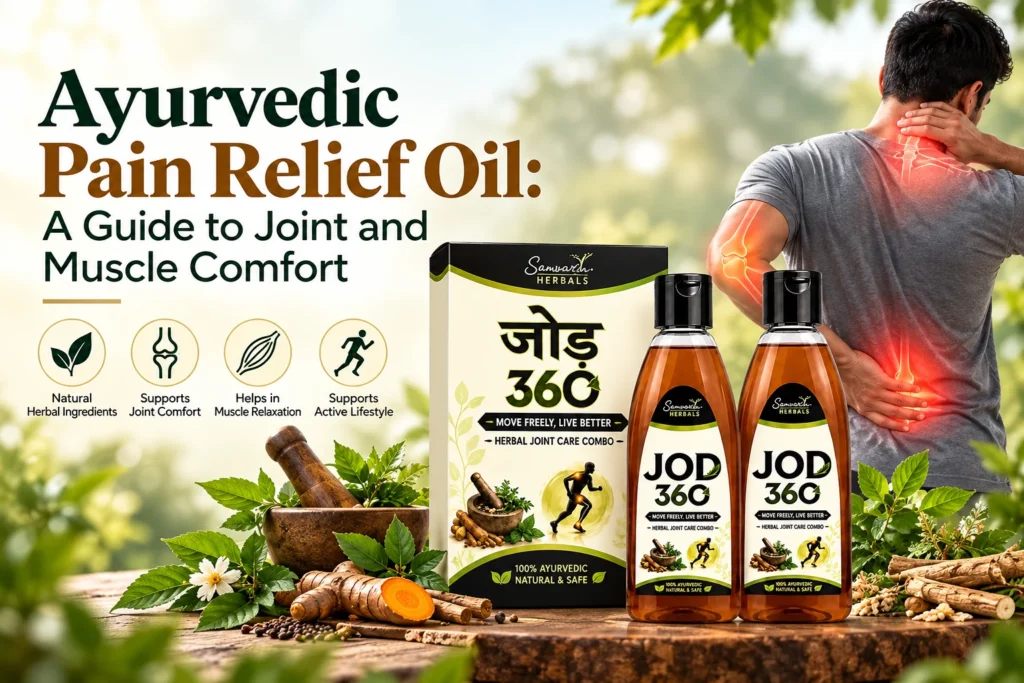
Discover JOD360 Ayurvedic Pain Relief Oil
JOD360 offers an Ayurvedic joint-care product featuring traditional herbal ingredients, including Ashwagandha, Aak, Shallaki, Nirgundi, Dashmool, and Nagarmotha.
The product is positioned for people looking to include topical herbal massage in their personal joint and muscle-care routine. Review the complete ingredient list, directions, and safety information before deciding whether it is suitable for your needs.
Explore the product here: https://jod360.com/
Choose products based on transparent ingredient information and realistic expectations. If you have ongoing pain, professional assessment should remain a priority.
Frequently Asked Questions
1. What is Ayurvedic pain relief oil used for?
Ayurvedic pain relief oils are topical products used in massage routines for temporary comfort and relaxation. Their suitability and effects depend on the formulation and the cause of the discomfort.
2. Can Ayurvedic oil help with knee discomfort?
Massage may provide temporary comfort for some people, but knee discomfort can have many causes. Persistent symptoms, swelling, or difficulty walking should be assessed by a healthcare professional.
3. Can I use Ayurvedic oil for back and neck stiffness?
Some topical oils are intended for massage around the back and neck. Follow the product directions, avoid forceful massage, and seek medical advice if symptoms are severe or persistent.
4. How often should I apply pain relief oil?
Follow the frequency and quantity specified on the product label. Do not assume that using more oil or applying it more frequently will improve the results.
5. Is Ayurvedic pain relief oil suitable for everyone?
Not necessarily. Allergies, sensitive skin, pregnancy, existing medical conditions, and other medicines can affect suitability. Check the ingredients and consult a healthcare professional when unsure.
6. Can oil massage replace medical treatment for joint pain?
No. Massage oil should not replace appropriate diagnosis, prescribed treatment, or recommended physiotherapy. Seek professional guidance for ongoing or worsening symptoms.
Conclusion
Taking care of your joints and muscles involves a combination of healthy movement, appropriate rest, good daily habits, and timely medical advice. Ayurvedic pain relief oil may be an option for people who wish to incorporate traditional herbal massage into their self-care routine.
Understanding the ingredients, following safe application instructions, and maintaining realistic expectations are essential when selecting any topical wellness product.
Explore JOD360 to learn more about its Ayurvedic joint-care offering and decide whether it fits your personal care routine.